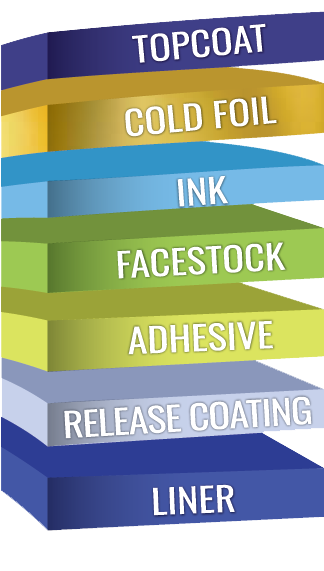
At Caxton Mark, we bring decades of experience, technical knowledge, and hands-on expertise to help you build the right label for your application. Every label is made up of multiple components, each playing a critical role in performance, appearance, and durability. Our team works with you to understand how your label will be used, then guides you through the selection of materials, adhesives, inks, and finishes to ensure the final result meets your exact requirements.
From standing out on the shelf to performing reliably in demanding environments, we focus on creating label solutions that not only look right, but function exactly as they should.
Request A QuoteThe facestock is the foundation of your label, influencing print quality, durability, and performance within your application environment.
| Type | Description | Primary Application | Common Uses |
|---|---|---|---|
| Paper | Versatile and cost-effective facestock with excellent printability | General product labelling | Food, retail, logistics |
| BOPP Film | Moisture, oil, and tear-resistant synthetic material | Durable product labelling | Beverage, personal care, industrial |
| Polyester (PET) | High-durability material for demanding environments | Industrial and long-life labelling | Equipment labels, asset tags |
| Vinyl (PVC) | Weather-resistant material designed for outdoor exposure | Long-term outdoor labelling | Industrial, outdoor applications |
| Direct Thermal (DT) | Heat-sensitive paper or film that prints without ribbons | Fast, on-demand labelling | Shipping, POS, short-term use |
| Thermal Transfer (TT) | Ribbon-printed material for enhanced durability and clarity | Unique or premium applications | Specialty products, branding, custom solutions |
Adhesive selection is critical to label performance, ensuring proper bonding, durability, and removability based on your surface and environment.
| Type | Description | Primary Application | Common Uses |
|---|---|---|---|
| Removable | Clean peel adhesives with no residue | Temporary labelling | Retail, promotions, pricing |
| Permanent | Strong, long-lasting adhesion for everyday use | Product and packaging labels | General manufacturing, consumer goods |
| Freezer-Grade | Maintains adhesion in cold, damp, or frozen conditions | Cold-chain labelling | Frozen foods, refrigerated products |
| Wash-Off | Designed to release during washing or recycling processes | Reusable packaging | Beverage containers, sustainability programs |
| High-Tack | Aggressive adhesive for difficult surfaces | Challenging substrates | Plastics, textured materials, industrial use |
| Specialty Adhesives | Includes ultra-clear, repositionable, and low-migration formulations | Custom applications | Food-safe labelling, specialty products |
We work with leading manufacturers and brands across multiple industries. Due to the proprietary nature of our client projects, our portfolio is shared exclusively with qualified partners upon request.
Request Portfolio AccessCoatings and laminations enhance label appearance, protect printed surfaces, and improve durability, ensuring your labels perform in real-world environments while reflecting your brand’s desired look and feel.
| Type | Description | Primary Application | Common Uses |
|---|---|---|---|
| Matte | Low-gloss finish with a smooth, refined appearance | Premium label aesthetics | Food, cosmetics, specialty products |
| Gloss | High-shine finish that enhances colour and contrast | Visual impact and shelf appeal | Beverage, retail, consumer goods |
| Soft-Touch | Velvety, tactile finish for a premium feel | Sensory branding | Luxury packaging, personal care |
| UV / Spot Coating | Targeted gloss and protection for specific elements | Highlighting design features | Logos, text, decorative accents |
| Scuff Resistant | Added surface durability against abrasion and handling | High-contact environments | Logistics, industrial, retail |
| Overlaminates | Film layer providing enhanced protection | Long-term durability | Outdoor use, chemical exposure, moisture-prone environments |
Coatings vs. Lamination
Coatings are liquid-applied finishes that cure directly on the label surface, enhancing appearance while providing protection against scuffs, moisture, and handling—without adding noticeable thickness.
Laminations are clear film layers applied over the label, creating a thicker, more durable barrier with superior resistance to water, abrasion, chemicals, and harsh environments. In summary: coatings enhance and protect the surface, while laminations add a protective film for maximum durability.
Ink selection plays a key role in label appearance, durability, and performance—impacting everything from print quality to environmental resistance.
| Type | Description | Primary Application | Common Uses |
|---|---|---|---|
| Water-Based | Absorbs into the substrate for a natural, flexible finish | Paper label printing | Food, retail, general product labels |
| UV-Curable | Surface-cured ink that forms a durable, resistant layer | High-performance labelling | Industrial, chemical, beverage, film labels |
Water-Based vs. UV Inks
Water-based inks are eco-friendly, low-VOC solutions that absorb into paper facestocks, creating a natural look and feel. They are cost-effective for high-volume applications and offer good flexibility on coated or uncoated surfaces, though they are less resistant to moisture, chemicals, and heavy abrasion.
UV-curable inks cure instantly under ultraviolet light, forming a durable surface layer with excellent resistance to water, abrasion, and chemicals. They deliver vibrant colour, sharper detail, and higher gloss, making them ideal for film and label environments where durability is essential.
In summary: water-based inks absorb into the material for flexibility and cost efficiency, while UV inks cure on the surface to provide enhanced durability and performance.
The liner carries and protects the adhesive until the label is applied, playing a key role in converting performance, application speed, and overall label consistency.
| Type | Description | Primary Application | Common Uses |
|---|---|---|---|
| Paper Liners | Strong under tension and designed for reliable performance on standard and high-speed lines | General labelling applications | Food, retail, logistics |
| Film Liners | High-strength, smooth surface liner for demanding environments | High-speed and precision applications | Clear labels, industrial, automated lines |
Paper Liners vs. Film Liners
Paper liners provide dependable performance under tension and are efficient for high-speed packaging lines. Made from renewable raw materials, they often support easier recycling and are well-suited for standard converting processes using common die-cutting tools.
Film liners offer increased strength and a smoother, consistent surface, making them ideal for high-speed or demanding applications. Their slick finish allows for even cleaner laydown, which is especially important for clear labels, ensuring optimal clarity and a clean, professional appearance on the final product.
In summary: paper liners offer reliable performance and sustainability benefits, while film liners provide enhanced strength and superior consistency for high-speed and clear label applications.
From custom printed labels to complete labelling systems, our team is ready to deliver the quality, consistency, and turnaround your operation depends on.
Request A Quote